India's agricultural export industry has received an important regulatory update following the government's decision to extend the Minimum Export Price (MEP) of natural honey at US$1,400 per metric tonne until December 31, 2026.
Through Notification No. 09/2026-27, dated April 10, 2026, the Directorate General of Foreign Trade (DGFT) extended the existing export-price condition applicable to natural honey under ITC (HS) Code 04090000.
Although the government has retained the existing price threshold rather than introducing a new rate, the extension has important implications for Indian honey exporters, agricultural businesses, international buyers and food-processing companies.
The decision also raises several economic and regulatory questions.
Why does India maintain a minimum export price for natural honey? How does the US$1,400 threshold affect export contracts? What responsibilities do exporters have regarding FOB valuation and quality certification? And could this policy influence India's competitiveness in international honey markets?
To understand these developments, this article examines the notification through the seven essential dimensions of journalism and economic analysis: Who, What, When, Where, Why, How and How Much.
1. WHO: Who Issued the Honey Export Notification and Who Is Affected?
The regulatory decision was issued by the Directorate General of Foreign Trade (DGFT), the government authority responsible for implementing India's foreign trade policies.
The notification affects businesses involved in exporting natural honey from India.
Who Are the Major Stakeholders?
Several participants are connected to India's natural honey export ecosystem:
Honey Producers and Beekeepers: Responsible for producing and supplying natural honey.
Farmer Producer Organisations (FPOs): Aggregate honey from multiple producers and facilitate organised marketing.
Honey Processing Companies: Handle filtration, processing, quality management and packaging.
Merchant Exporters: Purchase honey and supply it to international buyers.
International Importers: Purchase Indian honey for distribution and commercial use.
Food Distributors and Retailers: Connect imported honey with overseas consumers.
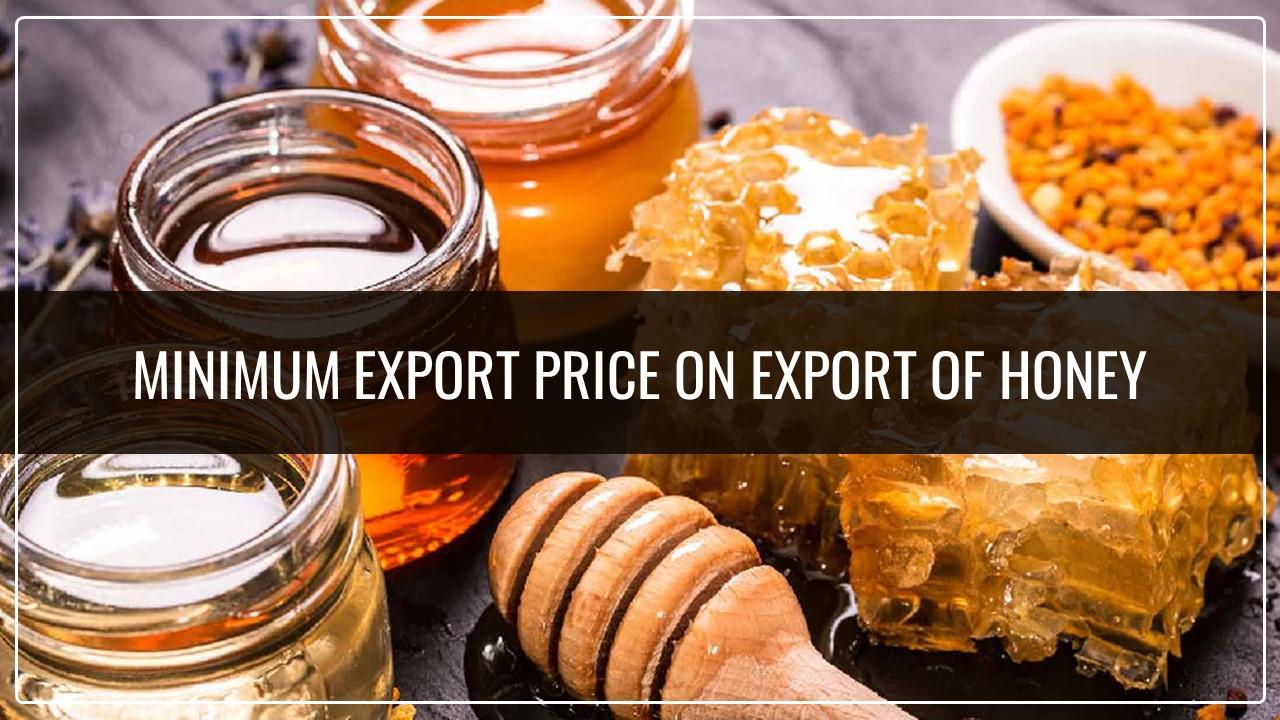
The extended MEP is particularly relevant to exporters negotiating international contracts and determining the declared FOB value of their shipments.
Who Must Pay Attention to the Notification?
Businesses exporting natural honey under ITC (HS) Code 04090000 should understand the applicable minimum export valuation requirement.
Importers purchasing Indian honey should also understand how this regulation can influence commercial negotiations and supplier quotations.
For businesses involved in natural honey export and related business services, understanding the applicable regulatory framework is important for avoiding documentation and valuation-related complications.
2. WHAT: What Has the Indian Government Changed in the Honey Export Policy?
The Central Government has extended the existing Minimum Export Price of natural honey from March 31, 2026, to December 31, 2026.
The extension was introduced through DGFT Notification No. 09/2026-27, dated April 10, 2026.
Importantly, the government has not increased or reduced the existing MEP. The prescribed threshold remains US$1,400 per metric tonne.
Key Details of the DGFT Notification
| Regulatory Particular | Details |
|---|---|
| Issuing Authority | Directorate General of Foreign Trade |
| Notification Number | 09/2026-27 |
| Notification Date | April 10, 2026 |
| Product | Natural Honey |
| ITC (HS) Code | 04090000 |
| Export Policy | Free, subject to MEP |
| Minimum Export Price | US$1,400 per MT |
| Pricing Basis | FOB |
| Previous Validity | March 31, 2026 |
| Extended Validity | December 31, 2026 |
What Does 'Free Subject to MEP' Mean?
The export policy classifies natural honey as Free, subject to compliance with the prescribed Minimum Export Price.
This means exporters can undertake exports under the applicable policy, provided they satisfy the minimum FOB valuation condition.
It does not mean that exporters can declare any export value they choose.
The central regulatory requirement is that natural honey exports covered by this notification must satisfy the prescribed minimum FOB value of US$1,400 per metric tonne.
3. WHEN: When Was the Minimum Export Price Introduced and Extended?
Understanding the timeline helps exporters identify the regulatory developments that led to the current policy position.
| Date / Period | Regulatory Development |
|---|---|
| March 14, 2024 | DGFT introduced a US$2,000 per MT MEP for natural honey |
| August 2025 | Government reduced the MEP to US$1,400 per MT |
| December 31, 2025 | Notification No. 52/2025-26 was issued |
| March 31, 2026 | Previous MEP validity deadline |
| April 10, 2026 | DGFT issued Notification No. 09/2026-27 |
| December 31, 2026 | New extended validity deadline |
The latest notification maintains the existing US$1,400 threshold rather than introducing a fresh export-price structure.
Why Is the December 2026 Deadline Important?
The current extension provides regulatory continuity for businesses planning their export transactions during the remaining validity period.
Exporters should pay particular attention to contracts, quotations and shipment schedules that extend beyond December 31, 2026.
The expiry of the current notification does not automatically mean that the MEP will be withdrawn.
Any further extension, amendment or withdrawal would depend on a subsequent government decision.
4. WHERE: Where Does India's Natural Honey Export Industry Operate?
India's honey production is geographically distributed across several agricultural states.
According to APEDA's published industry statistics, India's natural honey production reached approximately 152 thousand metric tonnes during FY 2024-25.
Major Honey-Producing States
| State | Share of Production |
|---|---|
| Uttar Pradesh | 16.74% |
| West Bengal | 15.85% |
| Punjab | 13.91% |
| Bihar | 12.35% |
| Rajasthan | 8.84% |
These states collectively represent approximately 67.69% of India's reported honey production.
India produces several varieties of natural honey, including:
Mustard honey
Eucalyptus honey
Lychee honey
Sunflower honey
Acacia honey
Multi-flora Himalayan honey
Karanj honey
Wild flora honey
This floral diversity creates opportunities for Indian businesses to develop specialised products and target differentiated international markets.
Where Does India Export Its Honey?
According to APEDA's FY 2025-26 export data, important international destinations for Indian natural honey include:
United States of America
United Arab Emirates
Saudi Arabia
Portugal
Bangladesh
The United States remains an important destination, while Gulf countries and other international markets offer additional opportunities.
However, entering international markets requires more than competitive pricing.
Exporters must also consider food safety, residue monitoring, product consistency, traceability, packaging standards and importing-country regulations.
India's geographical production strength and international market access provide an important foundation for expanding its natural honey export industry.
5. WHY: Why Has the Government Extended the $1,400 Honey Export MEP?
The extension raises an important economic question: why does the government maintain a minimum export price when natural honey exports are otherwise classified as Free?
Minimum Export Price mechanisms are trade-policy instruments that can influence the declared export valuation of specified commodities.
In agricultural trade, such conditions may have implications for:
Domestic market availability.
Export pricing arrangements.
Commercial negotiations.
Producer and exporter economics.
International trade competitiveness.
However, an important distinction must be maintained.
The April 10, 2026, DGFT notification establishes the continuation of the existing MEP but does not provide a detailed explanation of the government's specific economic motivation for extending it.
Therefore, it would be inaccurate to claim that the extension was specifically introduced to increase beekeeper incomes, prevent domestic shortages or control international honey prices.
Those outcomes depend on several additional economic and market factors.
Why Does the MEP Matter to Exporters?
The minimum export price can influence how businesses negotiate international orders.
For example, an overseas buyer seeking low-cost honey may have to reconsider a proposed commercial arrangement if the agreed export valuation does not satisfy India's applicable MEP requirement.
Exporters must therefore evaluate the relationship between:
Procurement costs.
Processing expenses.
Packaging expenditure.
International buyer expectations.
FOB valuation.
Export profitability.
The regulation makes accurate export-price assessment an important part of commercial planning.
6. HOW: How Does the $1,400 Per Metric Tonne MEP Work?
One of the most important aspects of the DGFT notification is understanding how the minimum export valuation is calculated.
The prescribed MEP is US$1,400 per metric tonne.
One metric tonne equals 1,000 kilograms.
Therefore:
[
\frac{$1,400}{1,000}=$1.40
]
The minimum FOB export value works out to US$1.40 per kilogram.
Understanding the Export Price Calculation
| Export Quantity | Minimum FOB Value |
|---|---|
| 1 MT | US$1,400 |
| 10 MT | US$14,000 |
| 20 MT | US$28,000 |
| 50 MT | US$70,000 |
| 100 MT | US$140,000 |
For example, consider an Indian exporter planning to ship 20 metric tonnes of natural honey.
The minimum FOB valuation would be:
20 × US$1,400 = US$28,000
The exporter must ensure that the applicable declared FOB valuation satisfies the prescribed threshold.
How Does FOB Pricing Work?
FOB stands for Free on Board, an internationally recognised trade term.
Under a typical FOB arrangement, the seller is responsible for delivering the goods on board the buyer-nominated vessel at the agreed port of shipment.
The buyer generally arranges the main international transportation and insurance.
Therefore, the US$1,400 MEP is an FOB-based export valuation requirement.
It is not the final landed price paid by an importer.
International freight, insurance, customs duties and distribution expenses may increase the final cost of the product in the importing country.
How Is FOB Different From the Final International Selling Price?
| Cost Component | General Responsibility Under Typical FOB Terms |
|---|---|
| Honey procurement | Seller |
| Processing and packaging | Seller |
| Export-side handling | Seller, as applicable |
| Delivery on board vessel | Seller |
| Main international freight | Buyer |
| Main cargo insurance | Buyer |
| Import duties | Buyer, as applicable |
The actual allocation of responsibilities must always be checked against the agreed Incoterms and commercial contract.
Understanding this distinction is essential for accurate export quotations and documentation.
7. HOW MUCH: How Large Is India's Honey Export Industry?
India's honey export industry has established a significant presence in international agricultural trade.
According to APEDA, India's natural honey production reached approximately 152 thousand metric tonnes in FY 2024-25.
During FY 2025-26, the country exported approximately 114,570.24 metric tonnes of natural honey.
India's Natural Honey Export Performance
| Export Indicator | FY 2025-26 |
|---|---|
| Export Quantity | 114,570.24 MT |
| Export Value | US$206.47 million |
| Illustrative Exchange Rate | ₹90 per USD |
| Approximate INR Export Value | ₹1,858 crore |
| Average Export Realisation | Approximately ₹162/kg |
The approximate ₹1,858 crore figure represents the converted export value using an illustrative exchange rate of ₹90 per US dollar.
It should not be interpreted as the profit earned by Indian exporters.
Similarly, the average export realisation of approximately ₹162 per kilogram is an aggregate figure, not the actual procurement price paid to individual beekeepers.
How Much Honey Can Be Exported Under the MEP?
The MEP does not establish a maximum export quantity.
It establishes the minimum applicable FOB valuation.
For example:
10 MT requires a minimum FOB valuation of US$14,000.
20 MT requires a minimum FOB valuation of US$28,000.
100 MT requires a minimum FOB valuation of US$140,000.
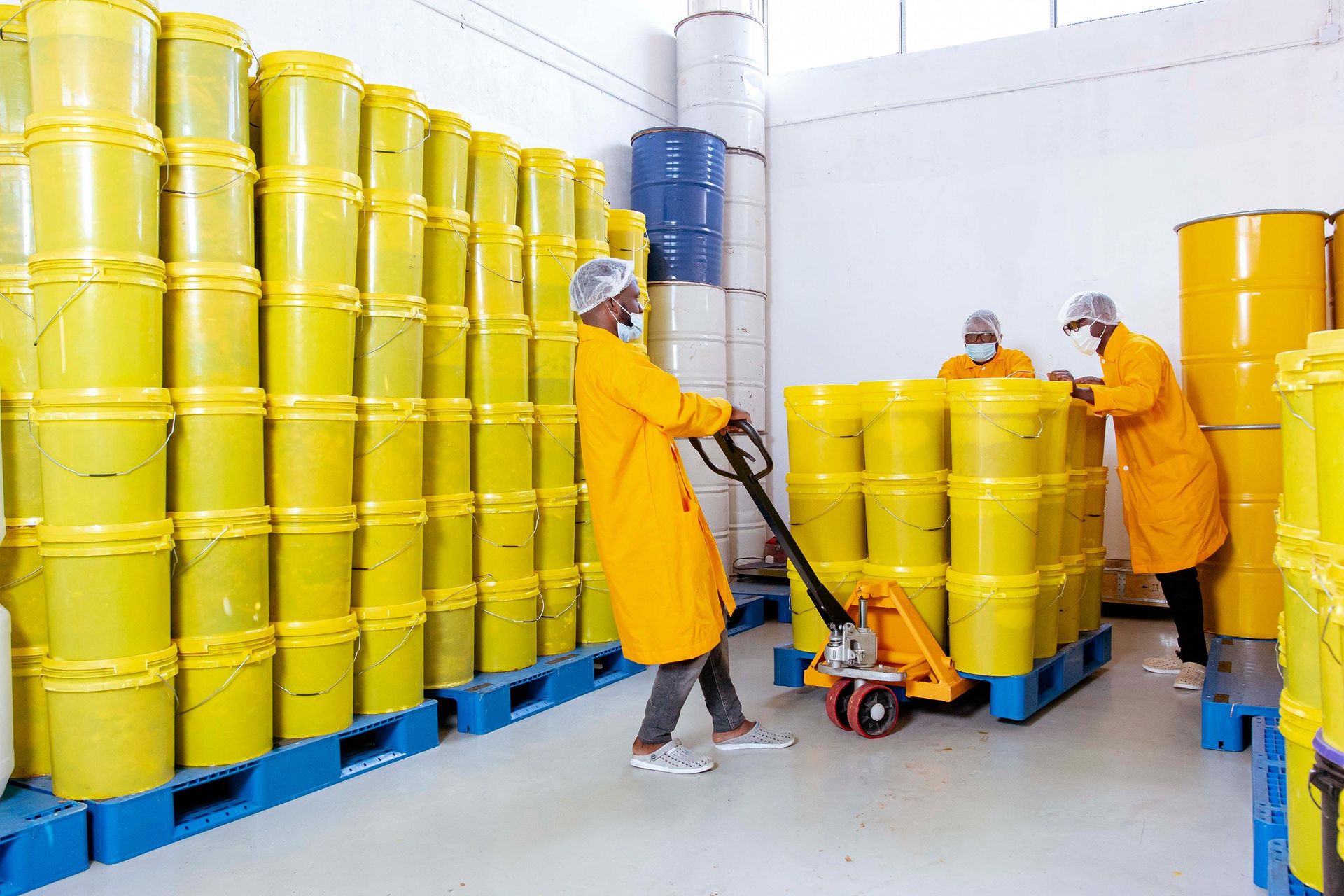
The commercial viability of each transaction will depend on procurement expenses, processing, quality certification, logistics and other costs.
Export turnover, export profitability and beekeeper income are three different economic measurements.
8. HOW: How Does Honey Quality Compliance Affect Indian Exporters?
Meeting the US$1,400 MEP does not automatically establish that an exported honey consignment satisfies international food safety requirements.
Export valuation and product-quality compliance are separate regulatory considerations.
India has an established quality-control framework administered through the Export Inspection Council (EIC).
Honey intended for export is subject to applicable requirements under the Export of Honey (Quality Control, Inspection and Monitoring) Rules, 2002, and relevant government orders.
The EIC's 2025-26 Residue Monitoring Plan addresses several food-safety considerations.
These include:
Veterinary drug residues.
Pesticide residues.
Pharmacologically active substances.
Heavy metals.
Environmental contaminants.
Relevant European Union compliance requirements.

For exporters targeting regulated international markets, these requirements are particularly important.
How Can Exporters Improve Honey Traceability?
International buyers increasingly expect suppliers to demonstrate the origin and handling history of their products.
A reliable traceability system can maintain records relating to:
Beekeeper and supplier details.
Procurement locations.
Collection and processing arrangements.
Storage and transportation.
Laboratory testing.
Batch identification.
Export documentation.
These records can help businesses improve buyer confidence, manage quality-related risks and demonstrate supply-chain transparency.
International honey trade requires both pricing compliance and product-quality assurance.
9. HOW: How Could the Extended MEP Influence India's Global Competitiveness?
The continuation of the US$1,400 per MT MEP may influence the pricing flexibility available to Indian exporters.
If international buyers are looking for lower-priced supplies, exporters must determine whether their products remain commercially competitive while complying with the prescribed minimum valuation.
However, international buyers do not evaluate suppliers on price alone.
Other important considerations include:
A. Product Differentiation
Specialised floral varieties and quality-focused products can help Indian exporters move beyond price-based competition.
B. Quality Assurance
Consistent laboratory testing, residue monitoring and reliable supply-chain records can improve access to regulated international markets.
C. Processing Infrastructure
Modern filtration, processing, packaging and storage facilities can improve product consistency and commercial value.
D. International Market Diversification
Expanding into additional international destinations can reduce excessive dependence on a limited number of overseas buyers.
E. Financial and Cost Management
Efficient procurement, logistics, bookkeeping and working-capital management can help exporters maintain sustainable commercial margins.
The Minimum Export Price is only one component of India's wider agricultural trade environment.
It cannot replace improvements in productivity, quality, infrastructure and international market development.
10. WHAT SHOULD INDIAN HONEY EXPORTERS DO BEFORE DECEMBER 31, 2026?
Businesses currently exporting natural honey, as well as those planning to enter the sector, should take the following steps.
1. Verify the Latest DGFT Policy
Check the applicable export policy for natural honey under ITC (HS) Code 04090000 before undertaking an export transaction.
2. Maintain the Prescribed FOB Valuation
Ensure that the declared FOB value complies with the US$1,400 per metric tonne MEP while the condition remains applicable.
3. Review Commercial Contracts
Examine existing quotations, purchase agreements and export contracts, particularly where shipment schedules extend beyond the current validity period.
4. Maintain Accurate Export Documentation
Keep commercial invoices, shipping bills, procurement records and other supporting documents consistent.
5. Verify Quality-Control Requirements
Check relevant EIC inspection, certification and residue-monitoring requirements.
6. Understand Importing-Country Regulations
Confirm applicable food safety, packaging, labelling and documentation requirements before shipping.
7. Monitor Further DGFT Notifications
Follow subsequent government announcements and amendments, particularly before December 31, 2026.
The current deadline should not be interpreted as an automatic guarantee that the MEP will disappear afterwards.
Any future extension, revision or withdrawal will require a subsequent government decision.
11. WHAT COULD HAPPEN TO INDIA'S HONEY EXPORT POLICY AFTER DECEMBER 2026?
The future of India's Natural Honey Export Policy will depend on subsequent government decisions and the prevailing international trade environment.
Three possible policy outcomes can be considered.
Scenario 1: Further Extension
The government may extend the existing US$1,400 per MT MEP beyond December 2026.
Scenario 2: Revision of the MEP
The government may revise the prescribed minimum export price depending on its policy considerations.
Scenario 3: Withdrawal of the MEP Condition
The government may withdraw the pricing restriction and allow exports under the applicable general export policy.
These are possible scenarios, not announced government decisions.
Exporters should therefore avoid making long-term commercial assumptions based exclusively on the current notification's expiry date.
Regular monitoring of DGFT notifications, foreign trade policy amendments and international regulatory requirements remains essential.
Conclusion: India's Honey Export Industry Must Balance Regulation, Quality and Competitiveness
The extension of the US$1,400 per metric tonne Minimum Export Price on natural honey until December 31, 2026, represents an important continuation of India's existing agricultural export framework.
Although the government has retained the existing threshold, the decision provides regulatory continuity for businesses exporting natural honey under ITC (HS) Code 04090000.
For exporters, understanding the MEP, maintaining accurate FOB valuations, complying with quality-control requirements and monitoring further regulatory developments should remain immediate priorities.
However, the larger opportunity extends beyond regulatory compliance.
India has substantial honey production capacity, diverse floral resources and established international markets. These strengths can support the development of a more competitive, transparent and quality-driven agricultural export ecosystem.
The future success of Indian honey exports will depend on how effectively businesses combine commercial efficiency, food safety, traceability, financial management and international market development.
The real challenge is not simply exporting more honey. It is building an export ecosystem in which Indian producers and businesses can compete globally through quality, compliance, transparency and sustainable economic practices.
— Shunyatax Global | Business, Finance, Taxation and International Trade Analysis
Disclaimer: This article is intended for general informational and educational purposes. It does not constitute legal, customs, taxation or professional export-compliance advice. Exporters should consult the latest official DGFT notifications and applicable regulations before undertaking export transactions.